Pinot Noir: Fragile, Fussy, and Occasionally Brilliant (Just like Lacie describes me.)
If grape varieties were people, Cabernet Sauvignon would be a retired military general with a cigar collection. Chardonnay would be a Fortune 500 executive who says things like “circle back.” Zinfandel definitely owns a motorcycle and at least one shirt with flames on it.
But Pinot Noir?
Pinot Noir is the most emotionally complicated grape in the room. The one who insists the microclimate isn't quite right, that the soil has feelings, that this particular hillside faces the sun at the wrong angle by approximately three degrees. And somehow, against all reason, that relentless sensitivity occasionally produces something so beautiful that grown adults start describing fermented grape juice with words like "haunting," "ethereal," and "life-changing" while quietly ignoring their credit card balances.
That’s Pinot Noir: fragile, dramatic, exhausting, and occasionally transcendent, again, a bit like me.
The grape itself is astonishingly delicate. Pinot Noir has paper-thin skins, which sounds poetic until you realize nature essentially handed it armor made of damp tissue paper. Thin skins mean lower tannins, less protection from disease, and an almost supernatural ability to rot if the vineyard experiences what can only be described as moist vibes.
A little rain before harvest? Catastrophe.
A heat spike? Existential crisis.
Too much sun? Burnout.
Too little sun? Sad cranberry juice with abandonment issues.
Other grapes handle adversity with the emotional resilience of a Labrador retriever. Pinot Noir reacts to weather changes like a Shakespearean actor denied proper stage lighting. Winemakers don’t really grow Pinot Noir so much as enter into ongoing hostage negotiations with it.
Its tightly packed clusters only add to the chaos, trapping moisture and inviting fungal diseases like freeloading roommates who never leave. Vineyard managers spend harvest pacing through rows of vines like ER doctors awaiting lab results. Pinot Noir demands cool climates, long growing seasons, and conditions so specific they make astrophysics seem flexible.
Then there are the clones because apparently Pinot Noir needed another layer of complexity. A vitis vinifera clone is a genetically distinct selection of a grapevine propagated from cuttings rather than seeds. Over centuries, tiny mutations accumulate, creating clones that remain Pinot Noir while behaving slightly differently in the vineyard and glass.
Some clones produce darker fruit and more structure. Others emphasize bright red fruit, floral aromatics, spice, or silky texture. Certain clones thrive in cool climates; others are valued for disease resistance or concentration. Pinot Noir is one of the most mutation-prone grape varieties on earth, so growers often blend multiple clones together to create balance and complexity. It’s less a single grape and more a collection of emotionally related personalities.
Its spiritual homeland is Burgundy, France, where centuries of obsessively detail-oriented monks essentially turned agricultural nitpicking into a spiritual discipline. Burgundy’s limestone soils and cool climate allow Pinot Noir to ripen slowly while preserving acidity and nuance. The resulting wines can smell like cherries, roses, forest floor, tea leaves, spice, and unresolved emotional trauma simultaneously.
Elsewhere, Oregon’s Willamette Valley became America’s Pinot Noir success story thanks to cool Pacific influence and long daylight hours. California’s Sonoma Coast produces richer, moodier versions with cult followings. New Zealand’s Central Otago somehow grows remarkable Pinot Noir in landscapes that look AI-generated, while Germany quietly makes elegant Spätburgunder as the rest of the wine world argues about Burgundy prices.
Because when Pinot Noir works, it doesn’t just taste good—it feels alive. Tiny shifts in climate, soil, elevation, or vintage can create dramatically different wines. The same sensitivity that makes Pinot Noir maddening to grow is also what makes it profound. It’s basically the method actor of grapes.
Of course, the grape’s dramatic personality extends directly into its pricing.
At the approachable end, wines like Au Bon Climat or Louis Jadot Bourgogne Pinot Noir deliver classic Pinot charm for relatively sane prices. Then comes collector territory, where phrases like secondary market provenance start entering casual conversation. Bottles from producers such as Domaine Armand Rousseau or Domaine Dujac routinely fetch hundreds of dollars, while cult wineries like Williams Selyem turned mailing-list allocations into something resembling Ivy League admissions.
And then there’s Domaine de la Romanée-Conti, where Pinot Noir stops behaving like wine and starts behaving like Renaissance art mixed with cryptocurrency. Certain bottles regularly sell for tens of thousands of dollars, which is generally the moment accountants excuse themselves from the conversation.
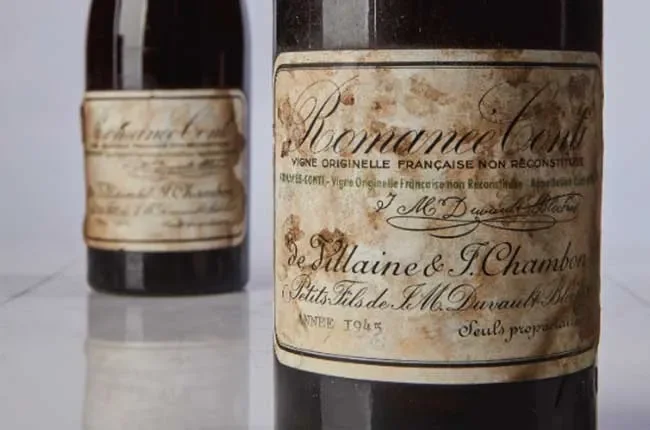
Naturally, Pinot Noir still found a way to become more dramatic. In 2026, a legendary 1945 bottle of Romanée-Conti sold at auction for over $800,000. At that point, the bottle is no longer technically a beverage. It’s a volatile luxury asset fueled entirely by prestige, mythology, and the collective emotional instability of wealthy wine collectors.
So yes, Pinot Noir is the high-maintenance friend who’s always one mild weather shift away from a full emotional breakdown. Fragile, fussy, disease-prone, and financially suspicious. Rational logic says growers should absolutely switch to something easier.
Yet nobody does.
Because when Pinot Noir behaves itself, it performs that rare magic trick of becoming more than wine. It tastes like a place, a season, and a memory somehow bottled together. It’s irrational, exhausting, and occasionally brilliant.
And honestly, maybe that’s exactly why people keep falling in love with it.