Rooted in Alsace: The Enduring Legacy of Domaine Emile Beyer
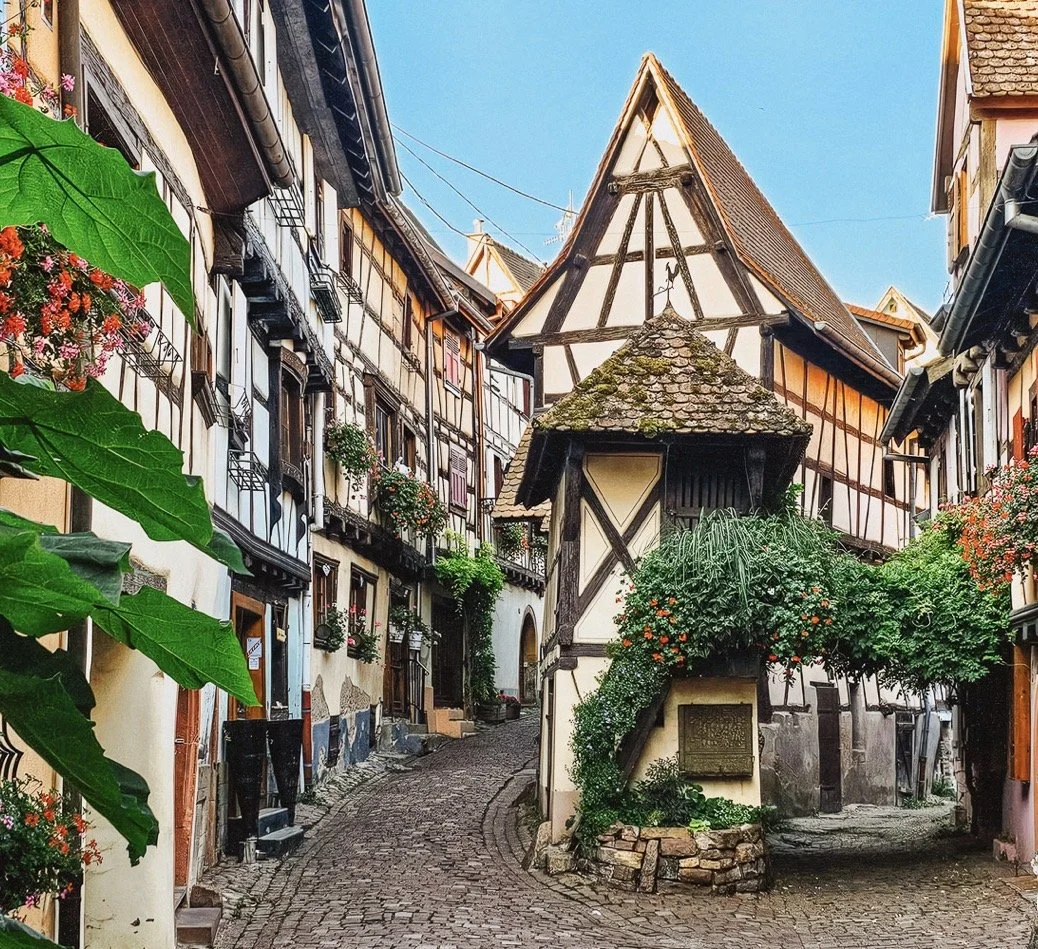
The village of Eguisheim sits in the foothills of the Vosges Mountains in Alsace, France, a circular medieval village so perfectly preserved it feels less like a place you visit and more like a place that receives you. Cobblestone lanes wind past half-timbered houses painted in muted ochres and rose, window boxes spilling geraniums onto streets that have barely changed in five hundred years. It is the kind of place that makes you slow down whether you intended to or not.
It is also, not coincidentally, the home of Domaine Emile Beyer.
A Name That Predates the Modern World
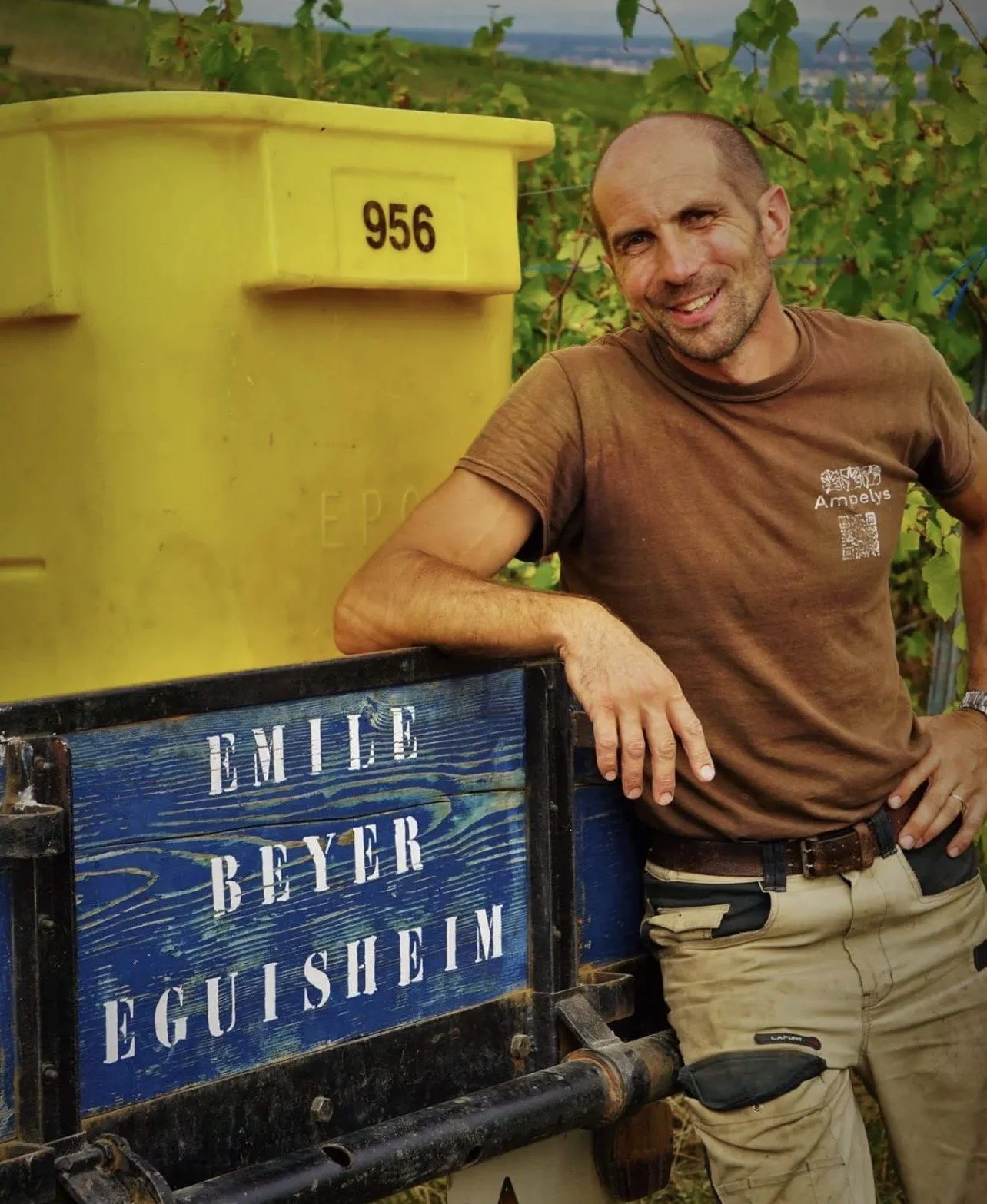
The Beyer family has been growing grapes in Alsace since 1580. Let that settle for a moment. While empires rose and fell, while borders shifted (and in Alsace, they shifted often) the Beyers remained, tending their vines through centuries of change. The domaine as it exists today carries the name of Emile Beyer, and is now stewarded by his grandson, Christian Beyer, who represents a lineage not just of winemaking but of place-keeping.
Christian is the kind of producer who is difficult to categorize by modern wine industry standards. He is not chasing scores or trends. He is not rebranding for a new generation of consumers. What he is doing quietly, deliberately is honoring a tradition while bringing his own voice to it. That balance, between inheritance and interpretation, is what makes a visit to this domaine feel like something more than a tasting.
The Wines: Alsace in Its Purest Expression
Alsace occupies a singular position in the wine world. Protected from Atlantic rainfall by the Vosges Mountains, it is one of the driest wine regions in France and paradoxically lush in its vineyards, precise in its wines. The grape varieties grown here are almost entirely aromatic: Riesling, Gewurztraminer, Pinot Gris, Muscat. Unlike most French appellations, Alsace labels by grape variety rather than geography alone, which means the wines wear their identity openly.
At Domaine Emile Beyer, the range is a study in how terroir and variety speak to one another when a winemaker steps back and listens.
Riesling is perhaps where Christian’s voice is clearest. Alsatian Riesling bears little resemblance to its German counterparts as these are dry, mineral, searingly precise wines with a backbone that rewards patience. The domaine’s Rieslings from the Eichberg and Pfersigberg Grand Cru sites carry a tension between citrus and stone that is unmistakably Alsatian, unmistakably Eguisheim.
Gewurztraminer, the grape that divides wine lovers more than almost any other, is handled here with a restraint that converts skeptics. Where Gewurztraminer can overwhelm with rose petal and lychee, Christian’s versions find a kind of elegance within the opulence. They are wines for a long table, a slow meal, a conversation that goes past midnight.
Pinot Gris here walks the line between richness and freshness with unusual grace, honeyed and textured without being heavy. And the Muscat, often overlooked, is a small revelation: delicate, floral, impossibly aromatic, and the perfect argument for drinking something unexpected.
Grand Cru and the Language of Place
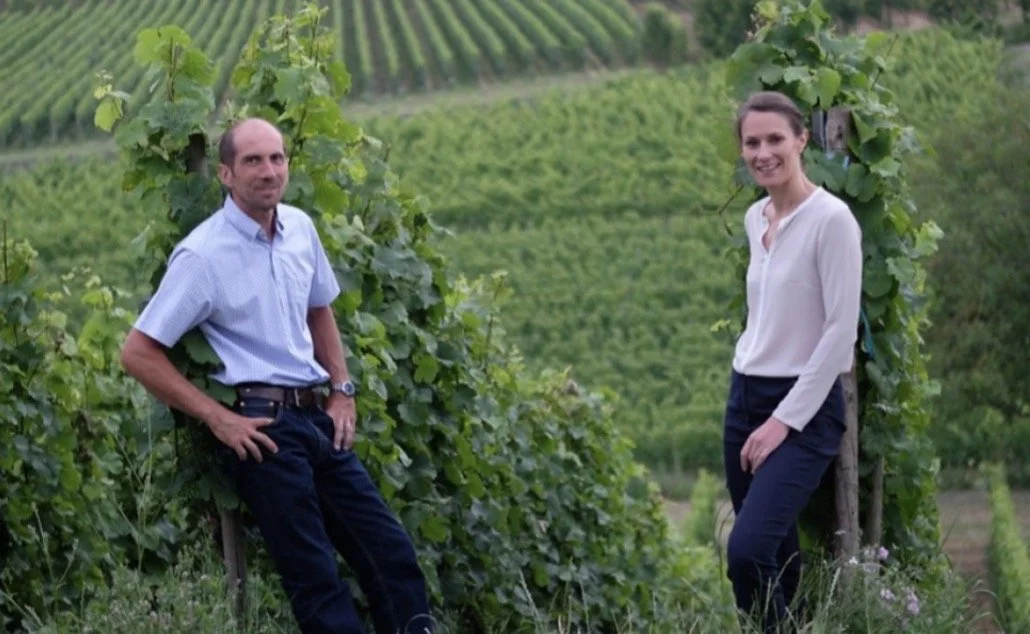
Alsace has fifty-one designated Grand Cru vineyards, each recognized for the distinctive character its soils and exposure bring to the wine. Domaine Emile Beyer works with two of the most celebrated sites in the southern Haut-Rhin: Eichberg and Pfersigberg, both within walking distance of the village.
Eichberg whose name translates roughly to “oak hill”, sits on clay and limestone soils that give its wines a depth and longevity that rewards cellaring. Pfersigberg, neighboring and equally storied, contributes a different kind of vibrance, more mineral and lifted. Tasting the same variety across both sites is one of those wine education moments that no classroom can fully replicate.
Christian farms these sites with the kind of respect that comes from understanding that you are, in the long arc of a family story, merely a temporary custodian.
Eguisheim as a Way of Traveling
There is a particular kind of traveler for whom a place like Eguisheim is not a backdrop but a destination in itself. The kind of traveler who would rather spend three days in one village than three days in five cities. Who wants to understand a wine region not by ticking off caves and tasting rooms, but by walking the same roads the winemaker walks, eating at the table where locals eat, letting the rhythm of a place settle into you before you leave.
Alsace rewards exactly this approach. The Wine Route, the Route des Vins d’Alsace, stretches nearly 105 miles through villages that feel removed from the pace of modern life. But to drive it quickly is to miss the point entirely. The real Alsace is found by pausing. By pulling off at a domaine with no appointment and seeing what happens. By sitting with a glass of Riesling on a terrace in the late afternoon light and not feeling any urgency about what comes next.
Domaine Emile Beyer is the kind of place that will hold you still for a while, if you let it.
A Story We Loved to Tell
Long before we ever imagined writing about wine or building a channel around the life we’re stepping into, we were pouring Christian’s wines across the bars of both of our wine shops and telling his story to anyone who would listen. There is something that happens when you believe deeply in a producer. You stop selling and start sharing. His wines were never a hard sell; they were an invitation, and our guests felt that.
So when Christian came through Chicago on one of his trips to the States, we jumped at the chance to meet him in person. We sat down to lunch together, this man whose family had been farming the same hillsides since 1580, whose wines had traveled across an ocean to find their way into our glasses and our guests’ hearts and what struck us most was how unhurried he was. How genuinely present. There was no performance to it. He was simply a person who knew exactly who he was and where he came from, and was gracious enough to share both.
It is a lunch we will carry with us for a long time. And it is, in many ways, the reason Alsace sits at the top of our list for where this next chapter takes us.
What Christian Beyer Is Really Making
At its core, the work happening at Domaine Emile Beyer is about continuity. Christian Beyer is not simply making wine. He is maintaining a conversation across generations, between a family and a piece of land, between Alsace and the wider world that has come to love what this region produces.
The wines are honest. The place is extraordinary. And the story behind both is the kind that deserves to be told slowly, over a full glass, without any rush to get to the end.